For many people, the term ‘water energy’ brings to mind a large dam. This association isn’t completely inaccurate, although it is rather outdated. Modern water energy technologies include not only large pumped-storage power stations functioning like batteries, but also marine current turbines, wave generators installed on breakwaters, and special software helping extract more energy from each cubic metre of water.
Having carefully studied the most recent 2026 reports, I can say that the situation with water energy is more complicated than the ‘hydropower is outdated’ idea. In this guide, I will provide information about various types of water energy, what is currently happening in this field, what problems exist, and how I would evaluate the situation as an entrepreneur.
What Is Water Energy Technology?
Well, let me get straight to the point. It is any kind of technology which converts water motion or water elevation into energy or stores energy using water. The major categories are:
- Conventional Hydropower. This includes dams or run-of-river plants which convert water flow into electricity.
- Pumped Storage Hydropower. Plants that pump water uphill during low demand periods of power generation and then use the same water to produce electricity through turbines during peak demand time.
- Marine Energy. This includes tidal stream turbines, wave energy converters and ocean currents technologies.
- Small and Low Head Hydro. They are small scale turbines used for low elevation and slow flow water.
- Digital Technologies. AI and digital twin, forecasting.
The Big Picture: Hydro Power Capacity Continues to Grow
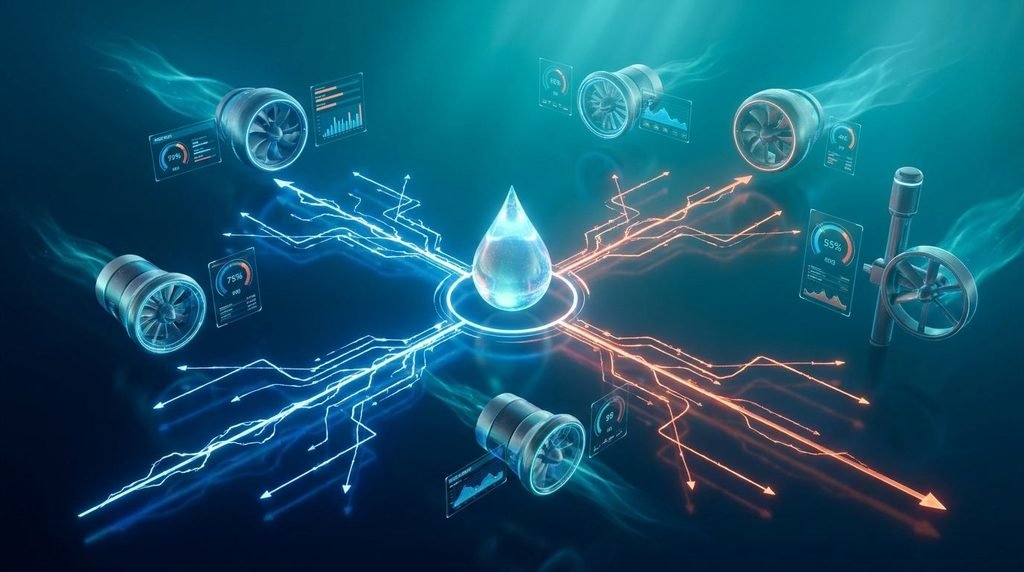
The most relevant source for such information is 2026 World Hydropower Outlook produced by the International Hydropower Association. According to the study, the total capacity of installed hydropower facilities is 1,469 GW, while the capacity added during the year is 28 GW. As stated in the same report, hydropower avoids 2.2 billion tonnes of CO2 emissions annually.
Hydropower is a developed industry, but it continues to add capacity. The fast growing segment is storage capacity.
Pumped Storage: “The Water Battery”
The 2025 headline is pumped storage. According to the IHA report, global pumped storage capacity exceeded 200 GW for the first time, at about 201 GW, thanks to the highest additions ever. Various sources put the highest addition at either 11.6 GW or 11.7 GW; hence, “about 11.6 to 11.7 GW”. IHA considers pumped storage as the leading form of large-scale energy storage in the world and described 2025 as “the year of the water battery.”
Why should you care? Solar and wind power are intermittent forms of power. Pumped storage will store excess power and discharge it later, helping stabilize the grid. The pipeline of projects is impressive: IHA mentions 243 GW of projects currently being constructed around the globe, plus a development pipeline of 621 GW at all stages. Various reports on the above IHA report also indicate that pumped storage capacity will nearly double in the next few years due to increased demand for electricity by data centers.
Some noteworthy regional information from the same sources:
- Over 40% of all new capacity in 2025 will be installed in China, while the country has over 300 GW of hydropower currently under construction, 218 GW of which will be pumped storage facilities.
- India plans to expand its pumped storage capacities, with the goal of reaching up to 100 GW of new capacity by 2035. There is a discrepancy regarding India’s current pumped storage capacities, with estimates ranging between 3.5 and 7 GW; therefore, I would consider this number approximate.
- There are over 60 GW of pumped storage facilities currently under construction in the United States.
- Interest in Europe has grown due to record renewable curtailment and negative electricity prices.
Marine Energy: It’s Showing Promising Signs but Is Still Underdeveloped
Although wave and tidal power are smaller, they’re happening. As a Yale Environment 360 article points out, while the IEA does not expect marine energy to play a large role in future energy production, it is one of the fastest-growing renewable sectors. As well, tidal power plants may be less complex than wave plants due to the fact that tidal water movement is limited to one axis of flow. Examples of existing facilities include the Mutriku breakwater wave power plant in Spain and the European Marine Energy Centre in Orkney since 2004.
Recent 2026 events include:
- France launched its energy strategy and announced a 250 MW tender to industrialize tidal energy technology, says Ocean Energy Europe.
- CorPower Ocean was chosen to head up the POWER-Farm project funded by the EU at €30 million, which will help make wave farms competitive and bankable.
- Orbital Marine Power won €8 million investment to advance commercialization of tidal-stream power projects, such as new licenses in Canada.
- Minesto gained backing from the European Investment Bank for its business case for the first EU tidal “Dragon Farm” project.
My take: marine energy is definitely early stage. It’s worth keeping an eye on, but don’t bet it will match the scale of hydropower any time soon.
Digital Tools: The Quiet Revolution
Some of the most significant developments in recent times do not consist of concrete and steel. They are software.
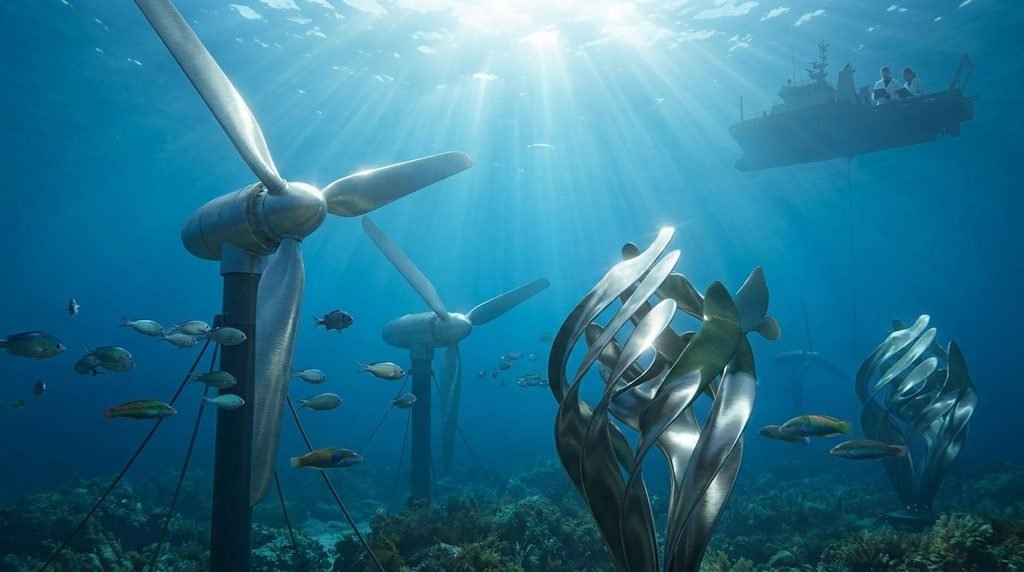
The 2025 review of a software firm specializing in hydropower says that digitalisation and artificial intelligence have transitioned from potentiality to reality for the year, while 2026 will see further development of hybrid optimisation solutions (hydro energy plus batteries) and digital-twin simulations for production planning. Digital twins, along with artificial intelligence and machine learning for predictive maintenance, real-time monitoring and analysis, are one of the topics discussed in a research review conducted by the European Commission in January 2026.
In actual terms, AI can utilize past weather and reservoir data to predict water inflows, thereby helping in avoiding unnecessary water spillage, especially in extreme weather conditions. This becomes even more important for old installations. This was one of the observations made by a firm speaking at the Philippines hydro summit.
The Hard Truths
It would be all too easy to just focus on the good parts, so here is the other side. According to the IHA report, financing limitations, permitting problems, transmission challenges, climate-induced changes in hydrology, and regulatory uncertainties are still the key barriers for both conventional hydropower and pumped storage technologies.
In addition to that, there are other aspects noted by the technology review:
- Environmental consequences. River ecology, fish, and environment are important issues. Turbines designed for fish and adaptive flows are some ways to deal with this problem, although not the full solution.
- Lon-term process. The construction of large water infrastructure takes years.
- Climate influence. Droughts and rain variability influence the amount of water.
- Costs for innovations. Costs for marine energy especially need to be reduced.
How I’d Approach It As a Business or Investor
Here’s my take on how to proceed, if you are involved in energy business.
- Make the distinction between mature and nascent. Hydropower and pumped storage are mature. Wave and tidal power are nascent.
- Go with the grid requirements. Right now, the most prominent one is storage and flexibility.
- Think about modernization. Modernizing existing plants through better turbines and digital technologies may be faster than constructing new ones.
- Consider local regulations. The permitting and environmental regulations differ greatly across countries.
- Don’t overlook data. Forecasting, maintenance, and trading software are increasingly important.
- Refer to primary sources. Official reports issued by agencies such as IHA and IEA are better than marketing literature.
What Mistakes Would I Avoid?
- Thinking that water energy is all about big dams – that’s just too narrow for the topic today.
- Taking all projections as guaranteed. Capacity pipelines and targets, say in India’s case, can change.
- Neglecting environmental or social concerns. They may put an end to projects.
- Buying into the promise of marine energy. It isn’t ready for wide implementation yet.
- Not paying attention to digital improvements. Updating software will boost efficiency fast enough.
Final Notes
Water energy technology in 2026 is a combination of the very old and the very new. Hydropower is the world’s leading renewable source, pumped storage is developing as a perfect battery for grids, marine energy is gaining momentum, and AI is contributing to efficiency. The main barriers are not technical but financial, legal, and environmental.
In my opinion, choose your spot in this field – it might be storage, modernization, marine or digital solutions – and follow the developments in primary sources like the IHA Outlook.
If you’re working in the energy or utility sector and need help with automation of any reporting, monitoring, or compliance workflow, feel free to check out what we can do at Aura Flow Tech.
Sources
- 2026 World Hydropower Outlook highlights hydropower’s growing role (Renewable Energy Magazine)
- Global hydropower capacity rises to 1,469 GW as pumped storage hits record level (Anadolu Agency)
- Global pumped storage capacity breaks 200GW barrier (Water Power Magazine)
- IHA: Global pumped storage tops 200 GW after record year for new capacity (Renewable Energy World)
- Pumped Storage Additions Lead Global Hydropower Growth (POWER Magazine)
- Support and New Investments Buoy Hopes for Marine Energy (Yale Environment 360)
- Ocean Energy Europe industry news
- Marine Energy Conference 2026, Newcastle (Tethys)
- Hydropower in 2025: Key Trends and What to Expect in 2026 (Hydrogrid)
- A comprehensive review of novel technologies for hydropower and strategic opportunities for Europe (JRC)
- The use of AI in hydropower plants is creating new challenges (pv magazine USA)
- Global Hydro Backs PH Renewable Goals With AI and Digitalization (Power Philippines)